Introduction
As a beginner woodworker, one of the first decisions you will face is whether to use hand tools or power tools in your projects. Each option has its advantages and disadvantages, especially when it comes to joinery, precision, and achieving a professional finish. In this article, we will explore the benefits and drawbacks of both hand tools and power tools to help you make an informed choice.
Understanding Hand Tools
Hand tools have been the cornerstone of woodworking for centuries. They offer several benefits:
- Control and Precision: Hand tools require a more intimate connection with the material. When using a hand saw, chisel, or plane, you can feel the wood and adjust your technique to achieve precise cuts and joins.
- Quiet Operation: Hand tools operate silently, allowing you to work without disturbing others or needing ear protection.
- Skill Development: Using hand tools helps you develop essential woodworking skills such as sharpening, honing, and understanding grain direction.
- Cost-Effective: While some hand tools can be expensive, a basic set is generally more affordable than a full suite of power tools.
Popular Hand Tools for Beginners
- Hand Saw: Essential for making precise cuts.
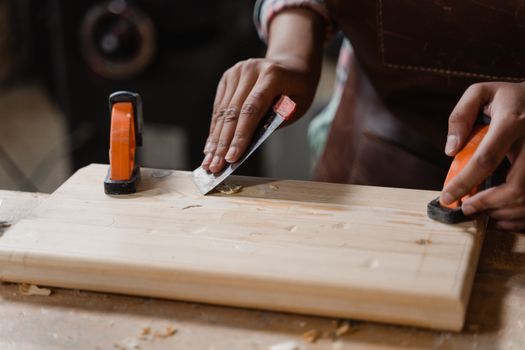
- Chisels: Great for joinery and detailed work.
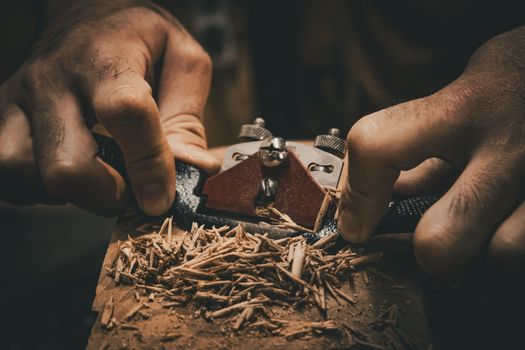
- Hand Plane: Used to flatten and smooth wood surfaces.
- Marking Gauge: Helps to make accurate layout lines.
The Case for Power Tools
On the other hand, power tools have revolutionized woodworking, offering speed and efficiency. Here are some advantages:
- Speed and Efficiency: Power tools can drastically reduce the time it takes to complete a project, allowing you to tackle larger and more complex builds.
- Consistency: Power tools provide a level of repeatability and uniformity that’s hard to achieve with hand tools, especially in joinery.
- Ease of Use: For beginners, power tools can simplify tasks like cutting and sanding, making woodworking more approachable.
- Advanced Techniques: Many power tools enable you to explore advanced joinery techniques that require precision, such as mortise and tenon joints or dovetails.
Essential Power Tools for Beginners
- Table Saw: Ideal for making straight cuts and ripping lumber.
- Router: Excellent for shaping edges and creating joinery.
- Drill/Driver: Essential for drilling holes and driving screws.
- Sander: Helps in achieving a smooth finish quickly.
Joinery Techniques: Hand vs. Power Tools
One of the most critical aspects of woodworking is joinery, which can significantly impact the strength and aesthetic of your projects. Let's examine how each tool type influences joinery.
Hand Tool Joinery
With hand tools, you can create intricate joinery that showcases craftsmanship. Techniques such as:
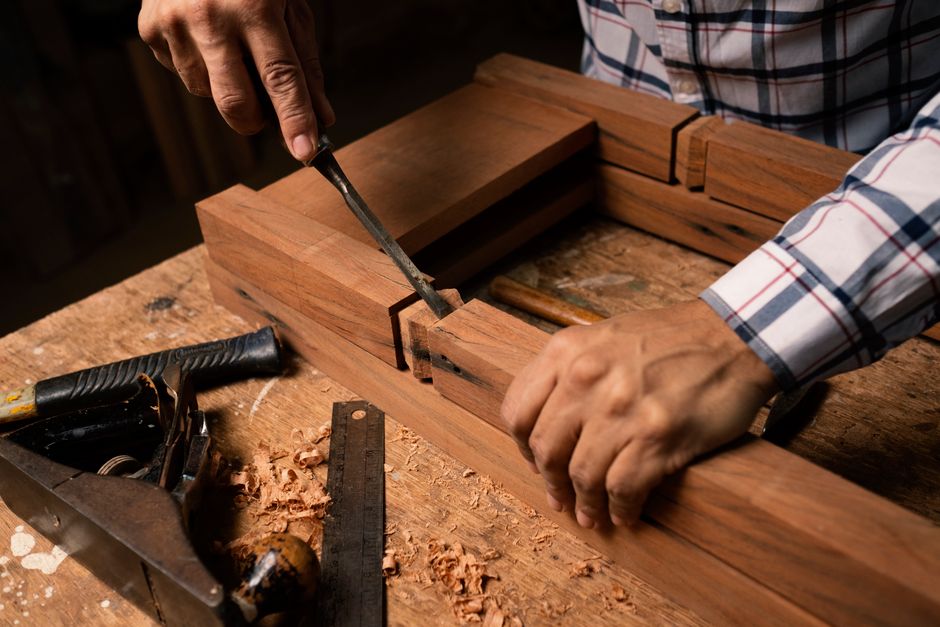
- Mortise and Tenon: This joint is a classic example of strong hand-cut joinery. It requires precision chiseling and fitting.
- Dovetail Joints: Known for their beauty and strength, dovetails made with hand tools can be a point of pride.
Power Tool Joinery
Using power tools allows you to achieve similar results with greater speed and repeatability. For example:
- Table Saw Dovetails: With a router or table saw, you can achieve precision dovetails quickly.
- Pocket Holes: This technique is incredibly popular among beginners for its simplicity and strength.
Achieving a Professional Finish
The finish of your project can often be the deciding factor in its overall quality. Both hand and power tools can help you achieve a professional look:
- Hand Tools: Hand planes and scrapers can produce a glass-like finish on wood surfaces, allowing for meticulous work.
- Power Tools: Random orbit sanders and detail sanders can speed up the finishing process while ensuring uniformity, especially on larger surfaces.
Final Thoughts
As a beginner woodworker, the choice between hand tools and power tools ultimately depends on your goals and comfort level. If you are interested in developing traditional skills and craftsmanship, hand tools may be the way to go. However, if you prefer speed and efficiency, power tools can help you achieve impressive results quickly.
For those looking to explore various projects and joinery techniques, consider using a resource like Ted Woodworking, which offers a vast selection of plans that cater to both hand and power tool users.
FAQ
1. Can I start woodworking with only hand tools?
Yes, you can start woodworking with hand tools. Many classic techniques and joinery methods can be mastered using only hand tools.
2. Are power tools necessary for beginners?
While not necessary, power tools can make the woodworking process faster and easier for beginners, allowing for more complex projects.
3. Which is more cost-effective for beginners, hand tools or power tools?
Hand tools can be more cost-effective initially, but investing in quality power tools can pay off in terms of time and efficiency as you progress.
📚 Related Articles
🔨 Want 16,000+ Woodworking Plans?
Get instant access to step-by-step plans with blueprints and cut lists.
Get Instant Access →