Understanding Woodworking Joints
When it comes to building furniture, the strength and durability of your project largely depend on the joints you choose. Woodworking joints not only hold your pieces together but also significantly influence the overall aesthetics of the piece. In this article, we will explore various woodworking joints, their strengths and weaknesses, and recommend tools that can help you achieve the best results.
1. Mortise and Tenon Joint
The mortise and tenon joint is one of the most traditional and strongest joints used in woodworking. It consists of a protruding tenon on one piece of wood that fits snugly into a mortise hole on another piece.
- Pros: Exceptional strength and durability; provides a strong mechanical bond.
- Cons: Requires precision and skill; time-consuming to cut by hand.
To create a mortise and tenon joint, you will need the following tools:
- Mortising Machine: This tool makes quick work of creating mortises. Pros include accuracy and speed, while cons may include cost and size limitations in small workshops.
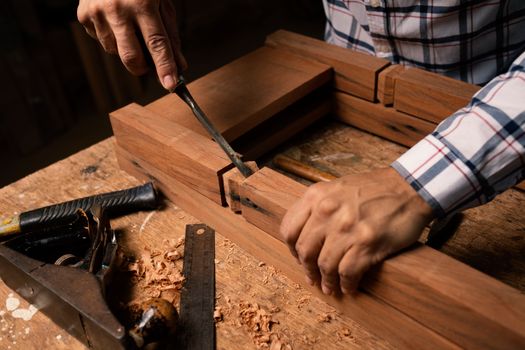
- Chisels: Essential for cleaning up the mortise and shaping the tenon. High-quality chisels provide excellent results but need regular sharpening.
2. Dovetail Joint
Dovetail joints are renowned for their aesthetic appeal and strength, particularly in drawer construction. This joint features interlocking shapes that resist pulling apart.
- Pros: Excellent for tension; visually appealing.
- Cons: Complex to cut; requires a high level of skill.
Tools needed for dovetail joints include:
- Dovetail Saw: A fine-toothed saw that provides precision cuts. Pros include control and accuracy, while cons include a steeper learning curve.
- Dovetail Templates: These can help in marking cuts accurately but may limit creativity.
3. Biscuit Joint
Biscuit joints use a small, oval-shaped piece of wood (the biscuit) that fits into slots cut into both pieces being joined. This joint is commonly used for aligning edges.
- Pros: Quick to assemble; good for alignment and added strength.
- Cons: Less strength compared to traditional joints; not suitable for heavy loads.
Key tools for creating biscuit joints include:
- Biscuit Joiner: A specialized tool that cuts the slots for the biscuits. Pros include speed and ease of use, while cons may be the lack of versatility for other joint types.
- Biscuit Selection: Ensure you have the correct biscuit size for your project; using the wrong size can lead to weak joints.
4. Pocket Hole Joint
Pocket hole joints involve drilling an angled hole into one piece of wood, then using screws to attach a second piece. This method is popular for quick assembly.
- Pros: Fast and easy to use; great for hidden joints.
- Cons: Can weaken over time if not done correctly; not ideal for fine furniture.
Essential tools for pocket hole joints include:
- Pocket Hole Jig: This tool ensures accurate drilling of the pocket holes. Pros include ease of use and quick adjustments, while cons can include limitations on joint strength.
- Drill Bits: Special bits are needed for pocket holes; ensure they are of high quality to prevent stripping.
5. Lap Joint
Lap joints are created by overlapping two pieces of wood. They can be simple or complex depending on how they are cut.
- Pros: Simple to construct; good for reinforcing corners and edges.
- Cons: May not be as strong as other joints; requires precision for a good fit.
Tools needed for lap joints include:
- Table Saw: Ideal for making straight cuts. Pros include versatility, while cons could be the initial investment cost.
- Router: Useful for adding decorative edges; requires some skill to use effectively.
Conclusion
Choosing the right woodworking joint is crucial for ensuring strength and durability in your furniture projects. Each joint type has its strengths and weaknesses, so consider the intended use of your project and your skill level when deciding. For those looking for detailed plans and guidance, Ted Woodworking offers a wealth of resources to help you build sturdy and attractive furniture.
FAQ
1. What is the strongest woodworking joint?
The mortise and tenon joint is often regarded as one of the strongest due to its mechanical interlock and surface area for glue.
2. Are pocket hole joints strong enough for furniture?
Pocket hole joints are suitable for many furniture applications, especially when used in conjunction with wood glue, but they may not provide the same long-term strength as traditional joints.
3. Can I use biscuits to join plywood?
Yes, biscuit joints can be effective for plywood, particularly for aligning edges and adding strength, but they should not be relied on for structural applications alone.
📚 Related Articles
🔨 Want 16,000+ Woodworking Plans?
Get instant access to step-by-step plans with blueprints and cut lists.
Get Instant Access →